LUMIBRIGHT
Façade & Architectural Lighting
Application inspiration · not a project reference
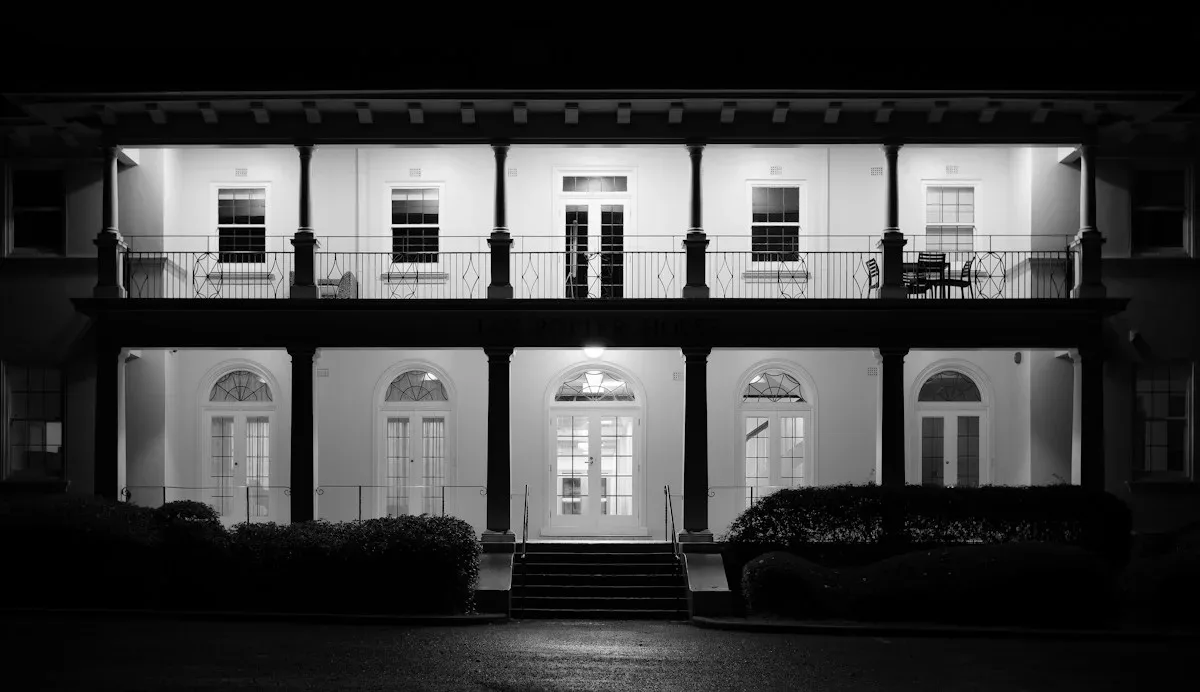
Facade lighting reveals the geometry and texture of a building after dark. Coordinate offset, throw distance and viewing positions before choosing optics, output and the model-specific fixing arrangement.
Design examples are starting points, not measured product results, guaranteed compatibility or universal regulatory minima. Confirm the exact model, site conditions, applicable standard and calculation with the responsible designer.
Design criteria
Lighting for building façades and architectural features
Façade lighting is an optics and control problem before it is a lumen problem. The brief is usually to reveal a material or a line - stone texture, a colonnade, a parapet - without spilling light into rooms, onto neighbours or into the sky. That means grazing or narrow-beam optics, precise aiming and accessories, ingress and corrosion protection matched to the Gulf climate, and a control layer that can hold a curfew setting.
| Zone | Illuminance | Uniformity | Colour | Glare | CCT |
|---|---|---|---|---|---|
| Grazing stone / textureMount close to the wall (50-150 mm) so the beam rakes the texture. | IlluminanceAim for 20-50 lx on the surface | UniformityDeliberately graded | ColourCRI 80-90 | GlareClose offset, shielded | CCT2700-3000K |
| Wall washing (flat surface)Space fittings at roughly the mounting offset x 1-1.5 for an even wash. | Illuminance30-75 lx on the surface | UniformityUo >= 0.5 visually even | ColourCRI 80-90 | GlareAsymmetric optic | CCT3000K |
| Feature / tree uplightIP67/IP68 in-ground, drained and rated for the load it sits in. | IlluminanceContrast-driven | Uniformity— | ColourCRI 80+ | GlareSnoot or honeycomb, full cut-off | CCT3000K (4000K for foliage) |
| Colour-change / media façadeFix the protocol (DMX/RDM or DALI) and the pixel pitch before selecting the fitting. | IlluminanceProject-specific | Uniformity— | Colour— | GlareAim below sightlines | CCTRGBW |
| Sky glow / obtrusive lightCIE 150 and local authority limits govern spill, glare and curfew hours. | IlluminanceFollow local curfew limits | Uniformity— | Colour— | GlareUpward light ratio as low as the detail allows | CCT2700-3000K |
Illustrative project-brief ranges, not measured model performance or universal code requirements. Confirm the relevant task, standard edition, site conditions and local requirements.
How to specify
Five decisions that set the fitting
- Decide what the light is revealing - texture, plane, edge or silhouette - then choose grazing, washing, narrow-beam or linear optics accordingly.
- Specify IP65 as a minimum, IP66/IP67 where jet-washing or flooding is possible and IP68 for submerged or in-ground positions.
- Check the finish and fixings against the microclimate: coastal salt spray needs marine-grade stainless or a qualified coating system.
- Confirm IK rating and accessory options (snoots, louvres, glare shields) where the public can reach or see the fitting.
- Agree a curfew scene with the client so the scheme meets obtrusive-light limits after a set hour.
Specify from
Candidate families for technical review
618 articles across 12 families

Inground Light
INGROUND
55 articles

Inground Light
GINI
26 articles

Inground Light
LYENG
25 articles
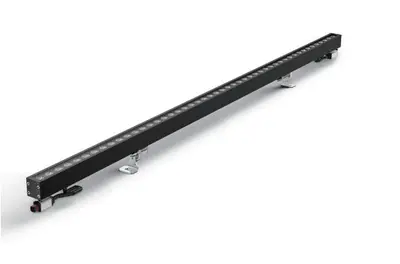
DIKON
20 articles

Wall Light
SIMOR
16 articles

Wall Light
SPUN
16 articles
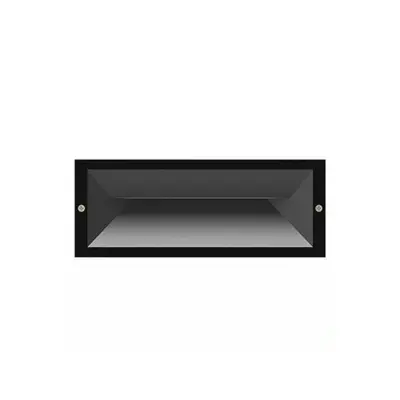
Wall Light
POTRA
15 articles

Wall Light
HELEN
14 articles

Industrial Light
PATRONE
13 articles
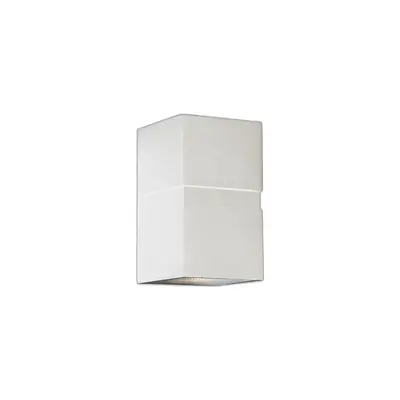
Wall Light
PETAL
13 articles

Inground Light
MILANA
12 articles
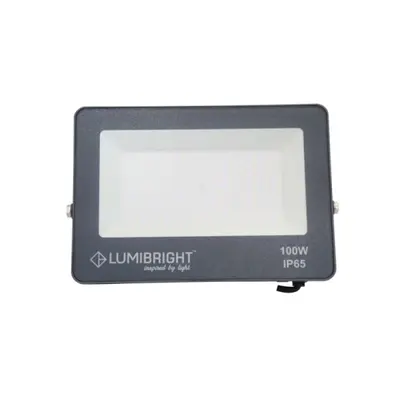
Flood Light
EIDER
12 articles
Specifier questions
Frequently asked
How far from the wall should a grazing fitting sit?
50 to 150 mm for texture grazing. Further out and the beam flattens; too close and the first 300 mm of wall is over-lit. The detail should also allow for drainage and maintenance access.
What IP rating do in-ground uplights need?
IP67 as a minimum and IP68 where the recess can flood or sit under irrigation. Check the drainage detail as well as the rating - standing water plus heat is what kills in-ground fittings.
Can I use warm white on stone and 4000K on planting?
Yes, and it usually reads well: 2700-3000K keeps limestone and sandstone warm, while 4000K makes foliage look greener. Keep each material consistent.
DMX or DALI for a façade?
DMX/RDM where the scheme is pixel-addressed or colour-changing; DALI-2 where it is static white with scenes and is tied into the building system. Decide before the fitting so the driver matches.